NYT Article
When Your Apple Watch Becomes An Office Taskmaster
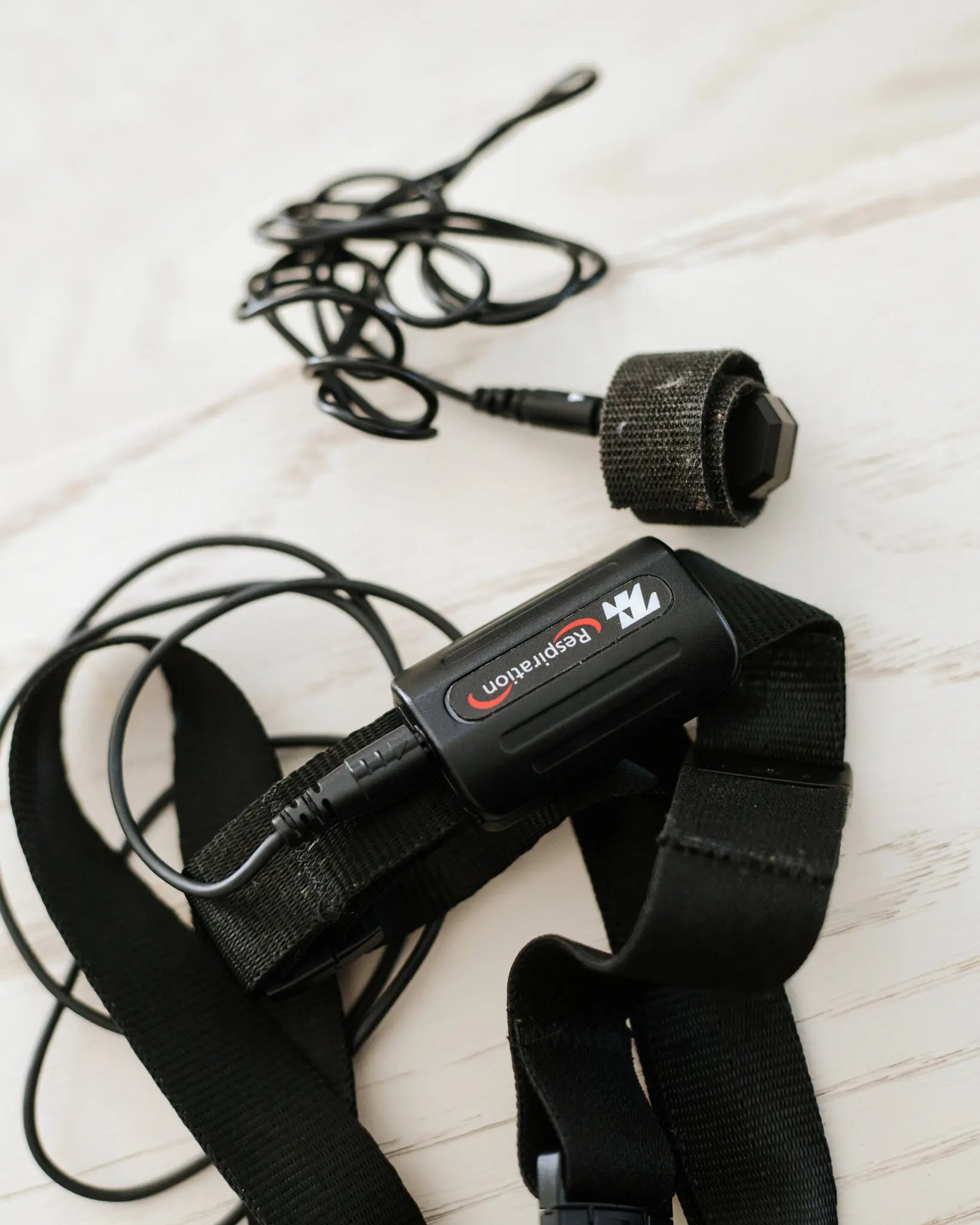
In December, Leah Lagos, a performance psychologist and H.R.V. specialist, mailed me a laptop and two sensors so she could find my resonance breathing frequency and walk me through the virtues of breathing at that rate for 15 minutes twice a day.
Dr. Lagos said she worked with professional athletes, corporate executives, hedge fund managers and law firm partners, among others. In her view, highly skilled white-collar workers are “biological athletes” who should strive to optimize their “cognitive self,” and she said regular breath work could make this happen more consistently.
“Maybe your peak you is from 8 a.m. to 2 p.m.,” she said. “But then this gives you another two or three hours.”
After she calculated my base-line H.R.V., she set up an electronic pacer on the laptop monitor that alternated between four- and six-second intervals. She instructed me to breathe in through my nose during the shorter interval and out through my mouth during the longer one.
When we finished, my H.R.V. had increased substantially according to the numbers on the screen. “Most people notice the activity of their minds, the clarity — that’s usually the first sign of resonance,” she told me. “Another is that people say they feel a fizziness in their body.” I had to admit that I felt kind of fizzy.
Still, it can be hard not to wonder if all the biohacking has become excessive. Among the people I spoke with, H.R.V. was often just the tip of the iceberg. Some said that they had multiple devices — watches, rings, wristbands, continuous glucose monitors — or that they tried to optimize their readings as if playing a video game. Or they used them to determine what time of day they should do their most taxing work and rearranged their schedules accordingly.
Michelle Cicale, an executive assistant at a financial services company, said she used an infrared sauna and red light to help improve her H.R.V., which she tracks with an Apple Watch. She said she had decided to limit her biohacking to a handful of rituals after seeing friends overdo it.
“I’ve watched people go insane from this,” she said.
For those who have anxiety — and, really, who among us doesn’t? — monitoring the watches and rings can become a compulsion.
“What this technology has done is it’s become an addiction for them, a kind of reassurance-seeking behavior,” said Bonnie Zucker, a clinical psychologist in Los Angeles who specializes in health anxiety and panic disorder. She said checking the devices was not unlike repeatedly washing hands or making sure a door is locked: It may briefly soothe, but can quickly become pathological.
And all of this is happening as artificial intelligence moves in on white-collar jobs, which may only heighten the anxiety to perform better at work. A handful of the biohackers I spoke with worked in A.I. or, like Mr. Zelles, were keenly aware of its rapid improvement. Perhaps, in our race to stay ahead of the machines, it can be tempting to try to make ourselves more and more like them.
Read the full article